Lot No: 500
Auction:Auction #8
Material: Gold
Period: Princely States
Date: 20-Sep-2025
Location: Lucknow
Estimated Price: ₹ 600000 - ₹ 800000
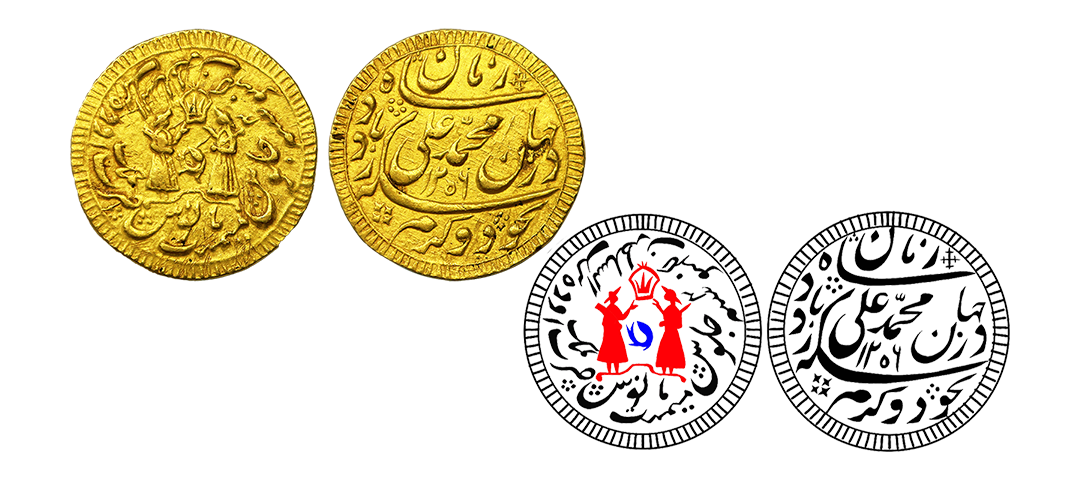
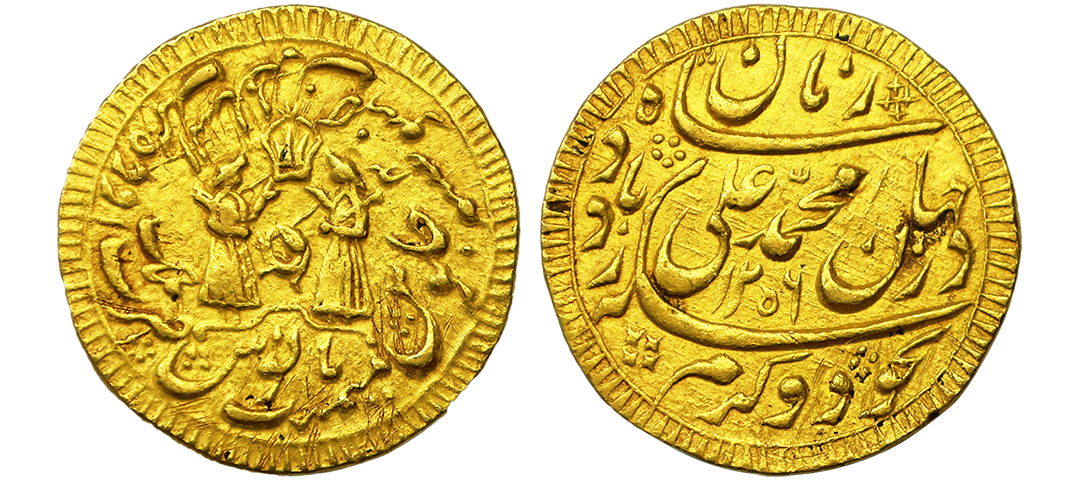
Awadh State, Muhammad Ali (AH 1253-1258/1837-1842 AD), Suba Awadh Bait-us-Sultanat Lakhnau Mint, Gold "Nazarana Ashrafi" AH 1256 / 4 RY, "Bejud-o-Karam" Couplet, Obv: Persian legend "Bajud-o-Karam sikka zad dar Jahan, Muhammad Ali Badshah-e-zaman".Rev: Persian legend "zarb suba Awadh Bait-us-sultanat Lakhnau, sana 3 julus maimanat manus".(KM # 316.1 /MK # 9.32)
Muhammad Ali Shah was the third King of Awadh, succeeding his nephew Naseer-ud-Din Haidar, After the sudden and suspicious death of Naseer-ud-Din Haidar in 1837, a power struggle ensued, The British East India Company backed Muhammad Ali Shah’s claim to the throne against Munna Jan (an alleged illegitimate son of Naseer-ud-Din), due to his perceived pliability and loyalty to British interests. His reign was heavily influenced (and controlled) by the British Resident in Lucknow. His coinage, especially the gold Nazarana Ashrafis and Mohurs, are exquisite and rare. Struck on a broad flan, this exceptional specimen displays full die impressions on both sides, with complete and intricately decorated borders, an uncommon feature, even among Nazarana issues, A highly attractive example with minimal handling marks, retaining its original luster and sharp details. Nazarana Ashrafis of Muhammad Ali from the Awadh series are exceedingly rare, particularly in such well-preserved condition with full details intact.The Awadh (Oudh) series includes some of the most aesthetically appealing coinage from the Indian subcontinent and are among the most sought-after pieces in Indian numismatics.
Lot is Closed